

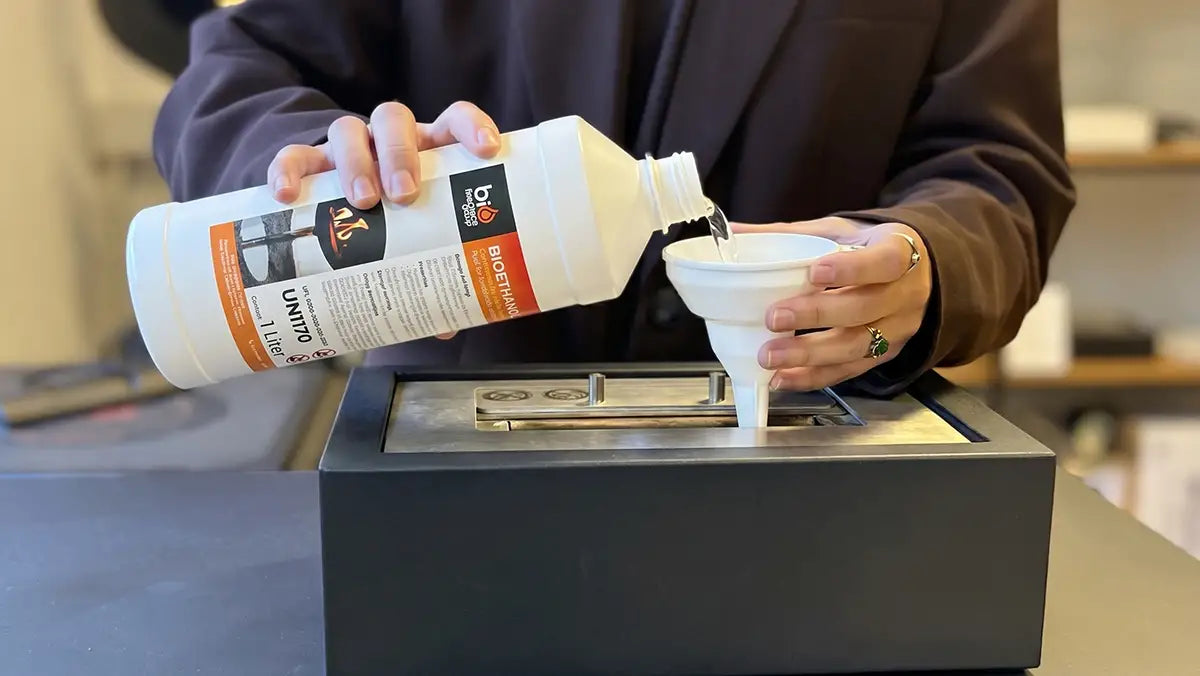
A bioethanol fireplace burns bioethanol fuel and therefore requires filling before use. The process for filling bioethanol can vary from fireplace to fireplace and from manufacturer to manufacturer. You should therefore always check the manual or ask your dealer to ensure the refilling is done correctly.
Before filling the bioethanol, make sure you are using the right type of bioethanol fuel intended for burning in bioethanol fires. There are many different types of bioethanol and not all are suitable for use in biofuel fires. We recommend using high-quality bioethanol with an alcohol percentage of 96.6%, to get the most beautiful flame and to avoid any unpleasant smell whilst burning.
Shop our selection of bioethanol fuel here.
Filling a Manual Burner
Most bioethanol fireplaces on the market today are equipped with a manual burner, meaning there is no power connected to the fireplace and you must operate and fill the burner manually.
Manual burners are available in many different sizes and designs and are produced by many different manufacturers. However, the process of filling the bioethanol fuel is the same across all of them.
The most important thing to remember when filling a manual burner is that you should never refill a lit or hot burner. Bioethanol fuel is highly flammable and can ignite if you do not follow the manufacturer's instructions.
Filling a manual burner is done by pouring bioethanol directly into the burner opening. The fuel can often be poured directly into the fire opening or through a small inlet next to it. We always recommend using a funnel or pump to avoid spilling. If any bioethanol is spilt, make sure to clean it up thoroughly before igniting the fireplace.
If you wish to refill a previously used manual burner, you must first ensure that the flame is completely extinguished and allow the burner to cool for 15–20 minutes before refilling.
Find our selection of funnels and pumps for filling your bio fireplace here.
Filling an Automatic Burner
The biggest difference between filling a manual and an automatic burner is that automatic burners have a built-in fuel tank. Rather than pouring fuel directly into the burner opening, automatic burners are filled using a pump that connects directly to the burner.
To fill an automatic burner, simply connect the pump to the burner's fuel inlet and press the button on the pump. The pump will automatically stop when the fuel tank is full, making it impossible to overfill the burner. This makes the refilling process both safe and straightforward.
Does the Refilling Method Vary Between Fireplaces?
As mentioned above, the process for filling bioethanol can vary between manufacturers and fireplace types. Always check the manual for your specific bio fireplace and burner. If it is not clear from the manual how the refilling should be performed, contact the manufacturer or your dealer.
Before and After Refilling
Once the bioethanol has been filled into the fireplace, it is practically ready to use and generally does not require any further maintenance whilst burning. Unlike wood-burning fires, a bioethanol fireplace should not be topped up with additional fuel whilst the fire is burning, as it would not be safe to do so.
It is also useful to understand how to ignite a bioethanol fireplace and how to extinguish it after use. These two aspects are straightforward to learn, but there are a few key points to be aware of depending on which type of fireplace you are using.


